“It’s a No-Brainer”: How Cove Engineering Uses #Task to Eliminate CAD Bottlenecks and Accelerate Delivery
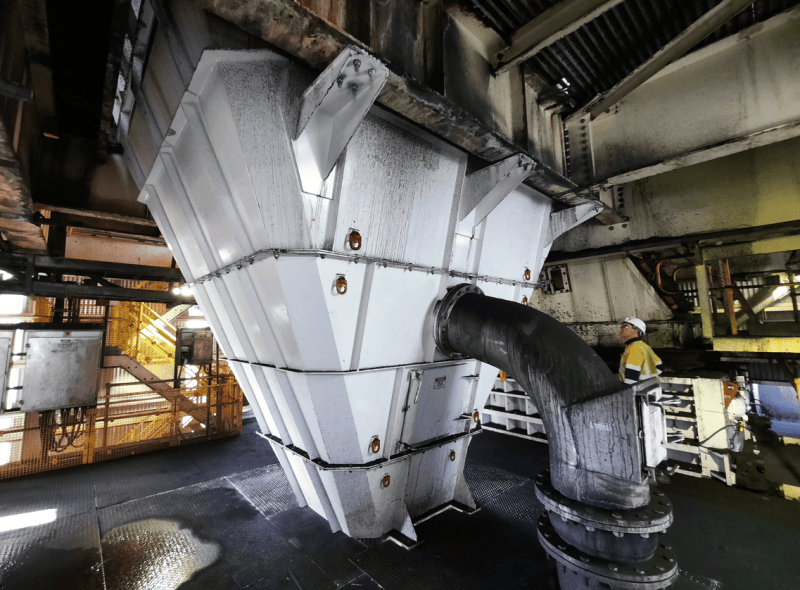
For Cove Engineering, manual drawing administration and repetitive export work were consuming valuable engineering time. #Task gave the team a faster, simpler way to automate PDF and DXF output, extract BOMs and cut lists, and keep large, drawing-heavy projects moving.
At a glance
Company: Cove Engineering
Industry: Engineering consultancy, OEM of bulk materials handling equipment, site services provider.
Use case: Automating SOLIDWORKS outputs, extracting BOMs and cut lists, and reducing manual backend processing
Key outcome: Unattended overnight PDF and DXF generation, faster backend workflows, and major time savings on drawing-heavy projects
“If you are dealing with large quantities of CAD, #Task is simply a game-changer. I wish I’d known about it years ago.”
— Jay Lawrence, GM of Engineering, Cove Engineering
Cove Engineering: a one-stop shop for complex engineering work
Cove Engineering is not a business built around standardised work or simple handoffs. As Jay Lawrence, GM of Engineering, explains, Cove is “effectively a one-stop shop.” The company’s background is in bulk handling and transfer chutes, but its work extends across a broad range of industrial engineering challenges.
That breadth is central to Cove’s value proposition. The team takes on everything from concept development and modelling through to detailing, drafting, documentation, and support for manufacture. Jay’s own description of his role captures the culture well: “Sometimes I delegate, sometimes I just do.”
That practical, hands-on mindset gives Cove Engineering real agility. But it also creates backend complexity. Every client wants something different. Workloads can swing from quieter periods to urgent, drawing-heavy jobs that consume every available engineering hour. In that kind of environment, efficiency in the CAD workflow is not a nice-to-have. It is essential.
The problem: too much manual admin at the worst possible point in the job
Before #Task, Cove Engineering’s biggest challenge was not engineering capability. It was the manual administration required after the design work was largely complete.
Historical projects had been built with descriptors rather than consistent part numbers, creating duplicate naming across years of work and making document management harder than it needed to be. Drawing borders, attributes, and outputs often depended on manual handling. Engineers were spending time at the drawing level doing work that Jay believed should be driven from the 3D model and file properties.
For a team that produces manufacturing-ready documentation in-house, those inefficiencies compounded quickly. A single project might require dozens or hundreds of drawing outputs. Saving each SOLIDWORKS drawing individually as a PDF and DXF was slow, repetitive, and deeply wasteful. On major projects, skilled engineers were not engineering. They were waiting for files to open, rebuild, save, and close.
As Jay puts it, “Our main outputs are drawings.” That made the bottleneck impossible to ignore.
On one major industrial project completed before Cove adopted #Task, Jay estimates the team lost at least 500 active labour hours to manual export work alone. It was not a minor inconvenience. It was a structural productivity issue.
Looking for a better answer without adding unnecessary complexity
Jay identified early that Cove’s CAD and documentation workflows needed to evolve. The business improved its internal standards by moving toward clearer part numbering, better use of weldments, and a more disciplined structure for drawings and associated data.
But internal process improvements only went so far. Cove still needed a practical way to automate the repetitive backend work that hit hardest at the end of large projects.
At one point, the business considered heavier-weight options to improve automation. But Jay was not looking to add complexity, infrastructure overhead, or extra licensing simply for the sake of it. He wanted a tool that solved the real problem: time lost to repetitive processing.
That is what made #Task stand out. Once Jay became aware of it, the decision came quickly. In his words, adopting #Task was “a no-brainer.”
Why #Task made sense immediately
For Cove Engineering, the appeal of #Task was straightforward. It solved a real operational problem quickly, without forcing a major systems overhaul.
The first and most immediate value came from automating the export of SOLIDWORKS drawings to PDF and DXF—the two outputs Cove depends on most as both a consultancy and a manufacturer.
Jay describes that benefit in simple terms: “We can tell #Task to generate a hundred or so PDFs and DXFs in the afternoon and come back in the morning to see them all done.”
That single capability changed the economics of drawing-heavy work. Instead of tying skilled engineers to repetitive file-processing tasks, Cove could queue outputs, let the software do the work, and return to completed deliverables.
Importantly, #Task fit into Cove’s existing SOLIDWORKS environment. Rather than forcing the team to reinvent the way it worked, the software complemented established processes and removed friction from the backend.
Beyond PDFs and DXFs: turning model data into usable project data
The value of #Task for Cove Engineering extends beyond file output.
Jay has also used the software to extract top-level bills of materials and cut lists to support procurement and project management. For a business working extensively with weldments, that matters. Instead of manually piecing together quantities across a project, Cove can extract information that shows the total amount of stock needed across multiple weldments.
That improves decision-making as a project develops from design to purchasing and fabrication. It also reduces the burden of handling large, fully detailed models at the exact stage of the job where the team needs clean, usable production data rather than more administrative effort.
In practice, #Task is helping Cove do more than automate deliverables. It is helping the team convert engineering data into operational data that can move projects forward.
Closing the last five per cent gap
One of the most important things about Cove Engineering’s story is that the team was never starting from zero. Jay and the team had already built clever workarounds inside SOLIDWORKS to reduce manual effort, including spreadsheet-driven methods for handling drawing registers and border information.
But those workarounds still required intervention, and they were difficult to scale when files had to be refreshed, rebuilt, or reprocessed repeatedly. Jay describes the situation neatly: SOLIDWORKS does “95% of the job and then just falls apart for the last 5%.”
That final five per cent is where #Task has made a real difference.
By rebuilding drawings before export, automating repetitive outputs, and giving Cove a repeatable way to process large batches of deliverables, #Task removed a layer of friction that had been absorbing time and attention.
It also opened Jay’s eyes to further automation opportunities. In one example, he later realised that #Task included a drawing split tool that could have saved several days of manual work on a massive multi-sheet file.
That learning curve has been part of the upside: the more Cove Engineering uses #Task, the more opportunities it finds to eliminate wasted effort.
Fast adoption and immediate team buy-in
A major reason #Task has worked well at Cove is that the onboarding experience was simple.
Licensing and installation were easy. The team is made up of experienced CAD users across different ages and roles, and everyone picked the software up quickly.
Jay sums up the experience clearly: “You just pay the money, sign in and get going.”
That low-friction adoption matters in an engineering business. Software only creates value when people actually use it. #Task cleared that hurdle immediately.
Jay’s verdict on internal adoption is equally direct: “The team basically love it.”
That reaction is telling. Engineers do not need more friction in their day. They need tools that remove it. On that front, #Task delivered visible value almost immediately, particularly on projects where unattended overnight automation made the difference between lost hours and completed outputs.
The results: better use of engineering time and a stronger backend workflow
Cove Engineering’s work is highly project-specific, so Jay is careful not to treat software as a magic solution for every scenario.
But when the right project comes along—especially a large, drawing-heavy one—his assessment is unequivocal: #Task is a game-changer.
The most obvious impact has been on productivity. Instead of burning hours on repetitive exports, the team can focus on higher-value work such as design, detailing, procurement support, and delivery.
That productivity lift shows up in practical ways. Large batches of PDFs and DXFs can be generated unattended, often overnight. BOMs and cut lists can be extracted to support project management and purchasing. Engineers spend less time on manual administration and more time on work that adds value. And Cove has greater confidence in keeping critical drafting work in-house rather than pushing it out and compromising on speed, cost, or control.
For a consultancy that needs to stay agile while handling highly varied projects, that matters. #Task helps Cove keep pace with the reality of its business.
A positive experience with Central Innovation
For Jay, the value of the software is reinforced by the experience of working with Central Innovation.
Cove did not need a complicated implementation program. It needed a straightforward introduction, responsive help, and support when questions or edge cases came up.
Jay’s feedback on that experience is positive.
“If you are dealing with large quantities of CAD, #Task is simply a game-changer,” he says.
“The CI team have been fantastic to work with, and continue to provide great support.”
That combination matters. For Cove Engineering, #Task is not just a tool. It is a practical productivity asset backed by people who understand the engineering environment it needs to operate in.
Why Jay’s message to other engineering teams is so clear
Asked what he would say to other engineering or manufacturing businesses considering #Task, Jay’s answer is immediate: “It’s a no-brainer.”
That endorsement carries weight because it comes from a business dealing with real CAD complexity, real variability between projects, and real pressure on engineering time.
For Cove Engineering, #Task has become a practical way to turn lost backend hours into productive engineering time.
Jay’s closing view says it all: “I wish I’d known about it years ago.”