Building capability through local expertise
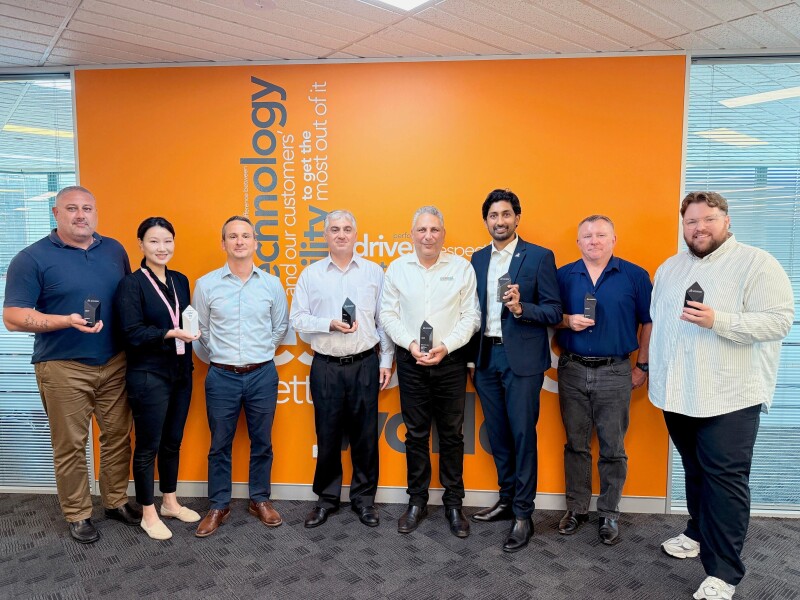
Central Innovation is helping Australian manufacturers strengthen engineering capability and improve workflows through local training, consulting and customer support for its offerings.
For manufacturers, investing in engineering software is only part of the equation. How effectively employees use that technology can determine whether businesses achieve the productivity, consistency and efficiency they need to remain competitive. Central Innovation works with manufacturers to bridge the gap between owning the right tools and having the skills to use them effectively. A common starting point is a new employee who brings engineering experience but has previously worked with different software.
While the underlying engineering principles remain similar, unfamiliar interfaces, functions and workflows can create a learning curve that affects productivity. Structured training helps businesses bring employees up to speed quickly, establish effective working practices from the outset, and reduce mistakes.
“People switching from another design program would take some significant time to get used to the new type of software,” said Kate Kononchuk, training coordinator at Central Innovation. “The company would prefer to get them up to speed by having a structured training on SolidWorks rather than getting them slowly figuring this out on their own and not being as productive during this period.”
The same challenge arises when manufacturers expand their product offerings, introduce new design requirements, or seek to bring previously outsourced activities in-house.
Businesses already using SolidWorks may need to explore advanced capabilities, while those wanting to conduct their own design simulations must develop the skills to use the relevant software effectively. Training also helps address the gap between engineering education and workplace readiness. Graduate engineers may understand the underlying principles but still require practical software knowledge to contribute productively to industry projects. For manufacturers facing skills shortages, developing that capability efficiently is increasingly important. Understanding the skills gap Central Innovation takes a tailored approach to training, beginning with an understanding of each customer’s business, workforce and objectives.
Account managers discuss the products being developed, the people involved and the outcomes the business wants to achieve. Many account managers have engineering backgrounds, allowing them to assess capability needs from an informed technical perspective. A SolidWorks skills analyser facilitated by Central Innovation provides another starting point, assessing individual employees or entire teams across different SolidWorks disciplines, including modelling, assemblies and drawings. The results help identify existing strengths and capability gaps, which can then be considered alongside the customer’s day-to-day workflows and business goals. “Rather than assuming where a customer’s capability gaps are, we can assess them and their current SolidWorks knowledge,” said Shem Carroll, inside sales executive at Central Innovation.
“We can then sit them down with a customer, look at these results alongside how they’re working day-to-day and what they’re trying to achieve as a business together.” From there, Central Innovation can recommend scheduled instructor-led training or develop a private programme around specific requirement. Scheduled courses provide a predefined set of lessons, while private training allows businesses to concentrate on the areas where they need the most support. Additional scoping meetings with Central Innovation’s technical team and engineers help shape programmes to suit individual customers. The assessment can also identify situations where the challenge extends beyond an employee’s technical knowledge.
If inefficient workflows are contributing to operational problems, the next step may be a broader consulting engagement rather than training alone. For Carroll, this is where the value of local expertise becomes particularly important. “We’re not simply giving someone an assessment and then leaving them with the results there,” he said. “We have local training and technical expertise that can help interpret where those gaps are and work with the customer on the next steps that are going to be right.”
Developing in-house engineering capability
Targeted training can help engineering and design teams use their existing technology effectively while building the confidence to manage more processes internally.
With SolidWorks, a stronger understanding of modelling techniques, design intent, assemblies and advanced functionality can help engineers work more efficiently and produce more consistent designs. Additional tools can extend these benefits beyond individual design tasks. #Task automates repetitive activities, including drawing exports, file conversions, property updates and other routine computer-aided design (CAD) operations. Automating these activities reduces the time engineers spend on manual work that can otherwise consume considerable resources. MaXXlink addresses the management and collaboration of engineering bill of materials information, helping teams work with structured product information and connect engineering data with downstream business processes.
This reduces reliance on spreadsheets and repeated data entry, supporting more connected operations.
“The real benefit comes from combining the right technology with the right knowledge, and we want customers to develop the confidence and capability to manage these processes internally, freeing their engineering teams to focus on higher value work,” said Chatura Elkaduwa, head of technical and product development at Central Innovation.
Building that internal capability also means looking beyond the engineering department. Better-connected information and more consistent processes can benefit other teams involved in product documentation, administration and downstream business activities.
Moving from support to continuous improvement
While training and consulting help manufacturers implement improvements, maintaining effective software environments and workflows requires ongoing attention. Central Innovation’s CI Care offering is designed to extend the customer relationship beyond initial implementation, combining support with a proactive approach to maintaining and improving technology. Traditional technical support remains important when users encounter problems or need assistance with specific functions. However, CI Care also provides structured activities such as periodic health checks, technical reviews, upgrade planning, and access to training and consulting expertise, depending on the service level.
For customers with more complex environments, this can include reviewing system utilisation, identifying workflow inefficiencies and helping maintain sound data management practices. The objective is to keep technology stable and efficient while ensuring it continues to support changing business requirements. “It’s about moving from simply resolving issues to actively contributing to the customer’s long- term success,” Elkaduwa said. The three offerings are designed to complement one another. Training develops the knowledge and confidence of software users; consulting helps businesses design and implement more efficient processes; and CI Care provides ongoing engagement to monitor improvements and identify further opportunities.
Having these capabilities available through one partner also provides continuity. Central Innovation’s teams develop an understanding of each customer’s environment, objectives and operational challenges, reducing the need for manufacturers to repeatedly explain their requirements to different providers. Tackling engineering data challenges One area where this combined approach can deliver value is engineering data management. Manufacturers may rely on shared folders, spreadsheets, manual processes and employees’ accumulated knowledge to manage product information, revisions and documentation. These arrangements can make it difficult for teams to locate the correct information, confirm revisions and prepare documentation for downstream activities.
Central Innovation’s consulting approach involves reviewing existing processes, identifying risks and implementing a more structured product data management environment. This can include standardising file structures, introducing controlled workflows, automating repetitive activities, and providing targeted training to help employees adopt the new processes.
In a recent example, Central Innovation implemented a product data management solution while identifying opportunities to extend the benefits to non-engineering teams. Training in tools such as MaXXlink and #Task helped support these improvements beyond the CAD environment, including processes involving Excel and metadata. The resulting improvements can include consistent revision management, reduced manual administration, better access to engineering information and stronger collaboration between departments.
These benefits may extend to finance and administration teams, as well as engineering and other operational functions. Central Innovation measures the impact against the customer’s original challenges, including time spent on repetitive tasks, the frequency of data-related issues, and the efficiency of engineering handovers.
Keeping pace with changing demands
As manufacturers continue to automate and digitise their operations, the need to develop workforce capability is unlikely to diminish. Australia and New Zealand face a shortage of experienced engineers, making it important for businesses to help new employees become productive quickly, even when they have previously used different engineering tools.
Kononchuk also expects training to become more personalised and continuous. Rather than relying solely on one-off, standardised courses, manufacturers are increasingly looking for training that addresses their specific tasks and operational requirements. Central Innovation’s training passport offering allows customers to purchase training credits in advance and allocate training days throughout the year. Employees can begin with essential or fundamental courses, apply what they have learnt in the workplace and return for more advanced upskilling as their capabilities develop. Alongside these changes, increasing automation and the emergence of artificial intelligence are making human interaction and connected technology environments important considerations.
Access to knowledgeable people who can demonstrate processes, answer questions and provide practical guidance remains valuable as manufacturers navigate evolving systems and expectations.
“Technology is evolving quite quickly, but simply having the technology doesn’t automatically mean that you’re going to create efficiencies within your workplace,” Carroll said. “You still need the right people with the right skills. You need the workflows that can support the business and you need to continually look at where things can be improved.” For Central Innovation, the answer is a locally supported, ongoing partnership that brings together technical expertise, workforce development and continuous improvement.
“We have local trainers, consultants, engineers and product specialists who can work alongside customers, understand how their business operates, help build capability within their teams and continue supporting them as their needs evolve in such a changing industry,” Carroll said. “Rather than it being a one-off software or training conversation, I think it’s increasingly becoming an ongoing partnership focused on continuous improvement.
originally printed in Manufacturers’ Monthly